Home Break-In Statistics: 7 Surprising Facts That Could Change How You Protect Your Home

When you purchase through links on our site, we may earn a commission. Here’s how it works.
You never think it’ll happen to you.
Not in your neighborhood. Not on your quiet street. And certainly not in broad daylight.
But imagine coming home to find your bedroom ransacked. Drawers pulled open. Clothes scattered everywhere.
Your grandmother’s ring, the one she gave you before she passed away, is gone. So is the necklace your husband gave you for your first Christmas together.
But the worst part isn’t what they stole.
It’s knowing a complete stranger walked through your home, touched your belongings, and invaded the one place you’re supposed to feel safe.
And one terrifying thought keeps running through your mind: What if I’d come home five minutes earlier?
Here’s what’s unsettling: Home burglaries don’t always happen the way you imagine. They don’t always strike at night. They don’t always smash windows. And some of the biggest risks may be hiding in plain sight.
We dug into FBI crime statistics and research involving convicted burglars to uncover when break-ins really happen, how thieves get inside, and what actually makes them think twice about targeting your home.
Home Break-Ins by the Numbers: 7 Facts That May Surprise You
Think burglars only strike at night? Or that every break-in involves a smashed window? The latest crime statistics tell a different story.
Here are seven surprising facts about burglaries in America.
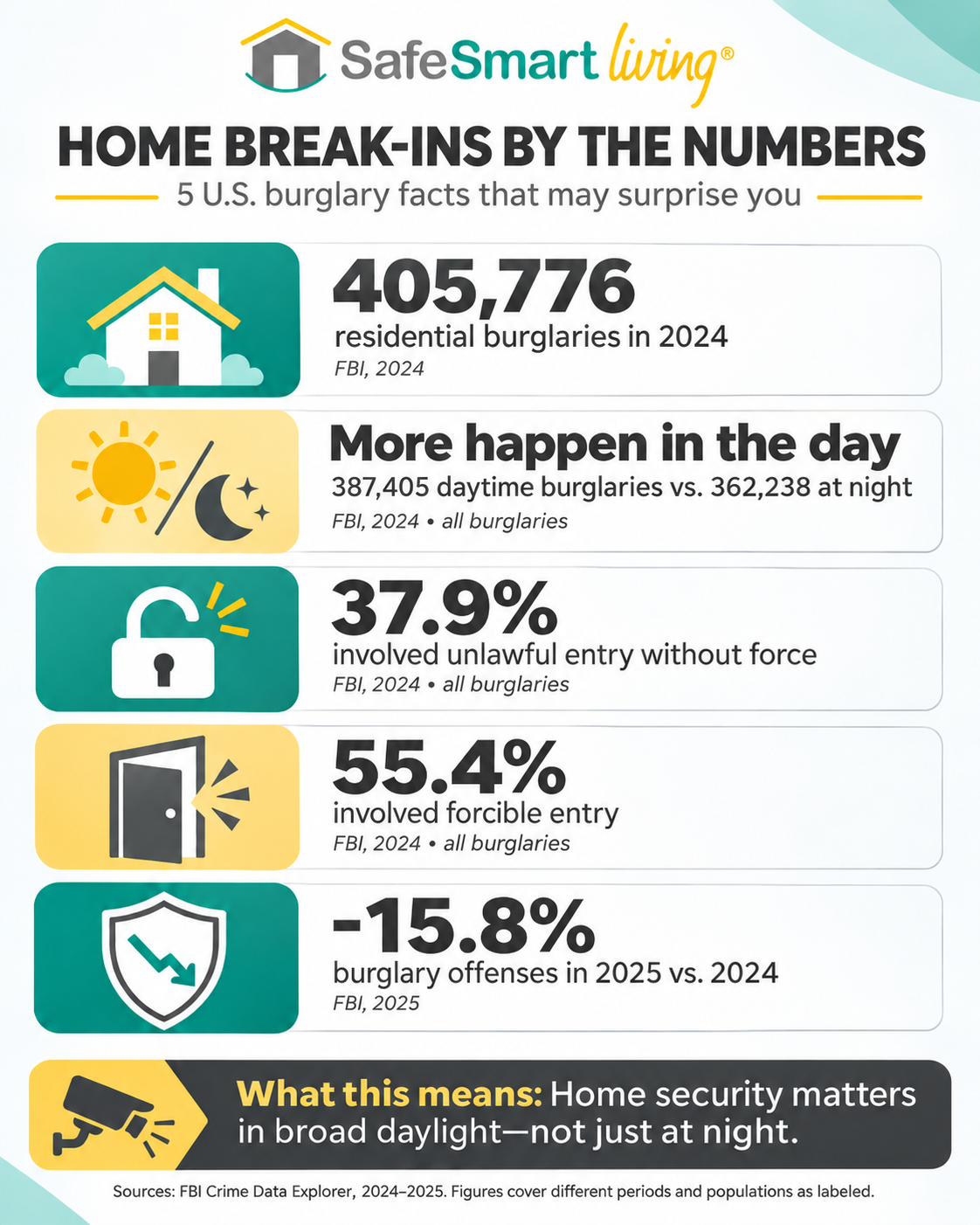
- Daytime burglaries outnumber nighttime burglaries. In 2024, the FBI estimated 387,405 burglaries during daylight hours, compared with 362,238 at night, across residential and nonresidential properties. Source: FBI, 2024
- Burglary rates dropped 17% in one year. The national burglary victimization rate fell between 2024 and 2025, according to the latest federal law enforcement estimates. Source: BJS, 2025
- Nearly 4 in 10 burglaries involved no forced entry. In 2024, 37.9% of burglaries were classified as unlawful entry without force. Not every intruder needs to kick down a door or smash a window. Source: FBI, 2024
- More than 400,000 residential burglaries occurred in 2024. Homes accounted for 52.1% of the nation’s estimated 779,542 burglaries. That means nearly half targeted other types of properties. Source: FBI, 2024
- Burglary incidents have been cut roughly in half over a decade. The estimated number of burglaries nationwide was 50.5% lower in 2024 than in 2015. Source: FBI, 2024
- Most burglaries involve forced entry. Despite the sizable share involving no force, 55.4% of burglaries in 2024 involved forcible entry. Strong doors, locks, and windows still matter. Source: FBI, 2024
- Only about 15% of burglaries were cleared. In 2024, law enforcement cleared 15.2% of burglary offenses through arrest or exceptional means. Recovering from a break-in isn’t always as simple as catching the person responsible. Source: FBI, 2024
The takeaway? Burglary is becoming less common, but the risks aren’t always what homeowners imagine. Understanding when burglars strike and how they get inside is a good first step toward protecting your home.
Think you know when burglars strike and how they get inside? These numbers might make you think twice.
When Do Most Home Burglaries Occur?
Picture a burglar sneaking through your house in the dead of night while everyone sleeps.
Creepy, right? But here’s the surprising part: Burglaries actually happen more often during the day.
According to the FBI’s 2024 crime statistics, an estimated 387,405 burglaries occurred during the day, compared with 362,238 at night. These figures include both residential and nonresidential properties.
The FBI defines daytime as 6 a.m. to 6 p.m., so the data doesn’t pinpoint an exact peak hour. But it challenges the idea that burglars only strike under cover of darkness.
What this means for you: That quick trip to the grocery store or afternoon school pickup isn’t a reason to leave your home unsecured. Lock your doors and windows every time you leave, even if you’ll only be gone a few minutes.
What Are the Chances of My Home Being Burglarized?
Nobody wants to imagine coming home to find their belongings missing. But here’s some reassuring news: Home burglary rates are falling.
According to the Bureau of Justice Statistics’ 2025 report, there were approximately 7.6 burglaries per 1,000 U.S. households in 2025, down from 9.7 in 2024. That’s a roughly 22% decline in just one year.
And these numbers include burglaries that were never reported to police, giving us a broader picture of the problem.
But there’s a catch. National averages can’t tell you exactly how safe your home is. Your risk can vary depending on your neighborhood, local crime patterns, and your home’s security.
What this means for you: The odds may be improving nationwide, but that doesn’t mean you should let your guard down. Your risk depends on where you live, local crime patterns, and how secure your home is. Understanding how burglars choose targets and gain entry can help you identify weaknesses and reduce your chances of a break-in.
How Do Burglars Get Into Houses?
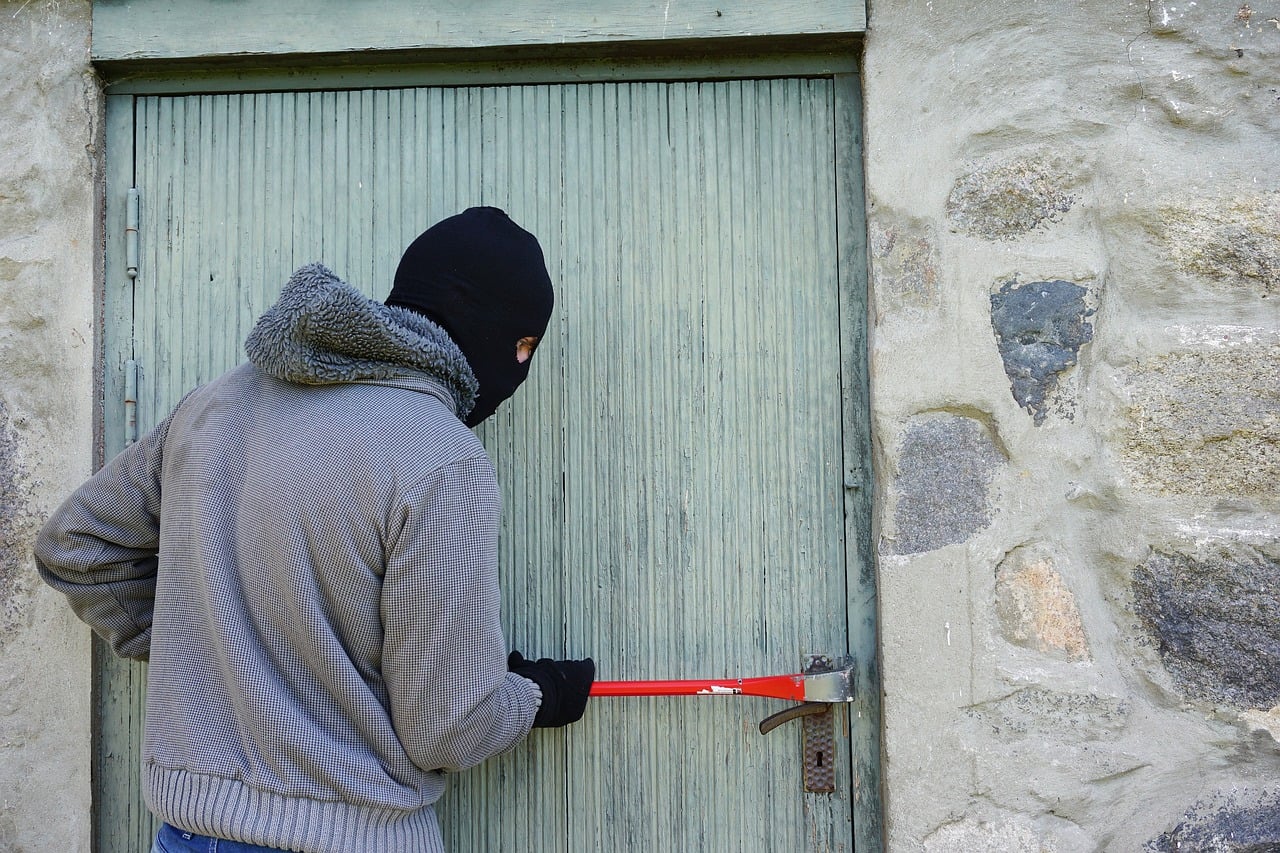
You might picture a burglar smashing a window or kicking down your front door. But sometimes, getting inside is surprisingly easy.
According to the FBI’s 2024 crime statistics, 37.9% of burglaries involved unlawful entry without force. Another 55.4% involved forced entry, while 6.7% were attempted forced entries. These figures include residential and nonresidential properties.
That means a substantial share of burglaries didn’t involve forcing an entry point open.
Which Entry Points Do Burglars Use?
Research from Arizona State University’s Center for Problem-Oriented Policing identifies several common vulnerabilities:
- Front doors: Weak locks, damaged frames, and unsecured doors can provide easy access.
- Back and side doors: Less visible entrances may give burglars more privacy.
- Windows: Unlocked or accessible windows, including basement windows, create opportunities.
- Sliding glass doors: Poorly secured sliding doors may be vulnerable to forced entry.
- Garage Doors: Your garage can be an overlooked entry point, especially if it connects directly to your home. An open garage door, an unsecured side entrance, or a weak connecting door can create opportunities for burglars. Keep your garage closed when you’re not using it, and always lock the door leading into your house—even when you’re home.
There’s no reliable national percentage showing that one specific door or window is the most common entry point for every type of home. It varies with the building’s design and surroundings.
Personal Experience: The Burglar Was Someone They Knew
A good friend of mine experienced a home burglary that still gives me chills. Her kids were teenagers, and like many families with teens, they had friends coming and going all the time.
One day, she came home to find the front door closed, but electronics and other valuables were missing. Whoever had broken in seemed to know exactly where to look. They even stole an iPad hidden under a bed in an upstairs bedroom.
Police discovered that a side window had been left unlocked. Even more shocking? The burglar turned out to be one of her kids’ friends—someone who had been welcomed into their home. They later learned this person had targeted other homes in a similar way.
Afterward, my friend installed security cameras and motion detectors on all her doors and windows.
Her experience taught me something I’ve never forgotten: Sometimes the biggest security risks aren’t the ones you see coming.
What this means for you: Walk around your house and look at every possible entrance, not just your front door. Check window locks, sliding doors, garage access, and the door connecting your garage to your home. Sometimes the easiest security improvements are the ones homeowners overlook.
Not sure which entrances or security features deserve the most attention? Our complete guide to home security explains how locks, sensors, cameras, and other protective measures work together to help secure your home.
Can Someone Break Into Your House While You’re Home?
Imagine hearing an unfamiliar noise downstairs, only to realize someone has entered your house.
It’s a terrifying thought. And while burglars may look for homes where nobody’s around, being home doesn’t guarantee you’re safe from a break-in.
Burglars may enter a house without realizing someone is inside. And not every burglary involves a dramatic, forced entry.
Current national crime reports don’t provide a clearly established percentage of residential burglaries that occur while someone is home. But the risk is real, and homeowners shouldn’t assume that simply being inside is enough to keep an intruder away.
What this means for you: Lock your doors even when you’re home, particularly at night. If you hear or see signs of an intruder, don’t investigate or confront them. Get somewhere safe and call 911.
What Do Burglars Look for Inside a Home?
A burglar doesn’t have to carry off your biggest possessions to leave you devastated.
Sometimes, it’s the smallest things that hurt the most.
Your grandmother’s ring. The watch your dad gave you. The jewelry you wore on your wedding day.
The FBI’s 2024 crime reporting system tracks stolen property across categories including cash, jewelry, electronics, firearms, and household goods.

Items worth considering when protecting your home include:
- Cash: Small, easy to carry, and difficult to recover.
- Jewelry and watches: Valuable items that can disappear into a pocket.
- Electronics: Laptops, tablets, phones, and other portable devices.
- Firearms: Valuable property that poses additional safety risks if stolen.
- Tools and other valuables: Items stored in garages, sheds, and around the house.
These are categories tracked in crime reporting, not a verified ranking of the most commonly stolen items in residential burglaries.
What this means for you: Don’t leave valuables in obvious or easily accessible places. Secure irreplaceable belongings, photograph expensive possessions, and record serial numbers. A simple home inventory can make an insurance claim much easier if something is stolen.
And don’t forget about valuables left outside. Packages sitting on your doorstep can attract opportunistic thieves, too. Our guide to preventing package theft shares ways to keep deliveries from disappearing before you even bring them inside.
How Much Does a Home Break-In Cost?
The financial damage from a burglary can go far beyond the things a thief carries away.
Imagine replacing a stolen laptop, repairing a broken door, changing your locks, and paying an insurance deductible—all because someone decided to break into your home.
And then there’s what you can’t replace.
Your grandmother’s ring. The family keepsakes. The feeling that your home is your safe place.
The FBI’s 2024 crime data includes information about the value of stolen property, but it doesn’t provide a readily verified national average for the total cost of a residential break-in, including repairs and other expenses.
The actual cost depends on what’s stolen, how much damage occurs, and what your insurance covers.
And even if insurance replaces every stolen dollar, it can’t always replace what mattered most.
What this means for you: Review your homeowners or renters insurance policy, especially your deductible and coverage limits for jewelry and valuables. Keep an updated home inventory and store copies of important documents somewhere secure.
Where and When Are Burglary Risks Highest?
Does living in a quiet neighborhood make your home safe from burglars?
Not necessarily.
Burglary risk varies from place to place, and even two houses on the same street can have different vulnerabilities.
Research compiled by Arizona State University’s Center for Problem-Oriented Policing identifies several factors that may make homes more attractive targets:
- Signs that nobody’s home: An overflowing mailbox, an open garage, or a house that appears vacant.
- Hidden entrances: Side doors, back doors, and windows concealed from neighbors.
- Poor visibility: Overgrown landscaping or secluded areas where someone could approach unnoticed.
- Weak security: Damaged locks, unsecured windows, or entry points that are easy to force open.
Are Burglaries More Common in Summer?
Historically, burglary research has found higher rates during warmer months, with August often standing out and February showing lower rates.
But seasonal patterns vary by location, and these historical findings shouldn’t be mistaken for a current nationwide monthly ranking.
Warmer weather can create opportunities when homeowners leave windows open or spend more time away from home. However, burglaries can happen in any season.
What this means for you: Don’t assume your neighborhood or the time of year makes you immune. Look for signs that your home is empty or easy to approach unnoticed, and check local police crime reports for patterns in your area.
Do Security Cameras, Alarms, Lights, and Dogs Actually Deter Burglars?
Would a burglar think twice if they spotted a security camera? Heard a barking dog? Or noticed an alarm sign in your yard?
Research suggests some of these precautions can influence which homes burglars target.
In a University of North Carolina at Charlotte study involving 422 convicted burglars, 83% said they would try to determine whether a property had an alarm before breaking in.
Even more interesting? 60% said they would look for another target if an alarm was present.
The research was published in 2013 and funded by an alarm-industry foundation, so these findings reflect what surveyed offenders said they would do—not a guaranteed reduction in burglaries.
And there’s evidence that alarms may protect more than just one house.
A Rutgers University study found that homes with burglar alarms were less attractive to intruders. Even more interesting, researchers found fewer residential burglaries in neighborhoods with a higher concentration of alarm systems.
The findings suggest that home security systems may have benefits that extend beyond your own front door.
Our Experience: A Neighbor’s Break-In Changed How We Think About Home Security
When our neighbor’s house was burglarized, it was a wake-up call. Suddenly, home security wasn’t just something we thought about… it felt personal.
We started researching security systems and eventually chose Frontpoint. What stood out wasn’t just the equipment, but the customer service. We called repeatedly with questions, never felt pressured to buy, and have received replacement equipment at no additional cost over the years.
The experience taught us that protecting your home isn’t just about buying gadgets. It’s about finding a security solution you can count on.
— Alex Schenker, Editor, Safe Smart Living
Which Home Security Measures Work Best?
Security alarms: Alarm systems may discourage burglars who want to avoid drawing attention. Visible signs of an alarm can also influence target selection.
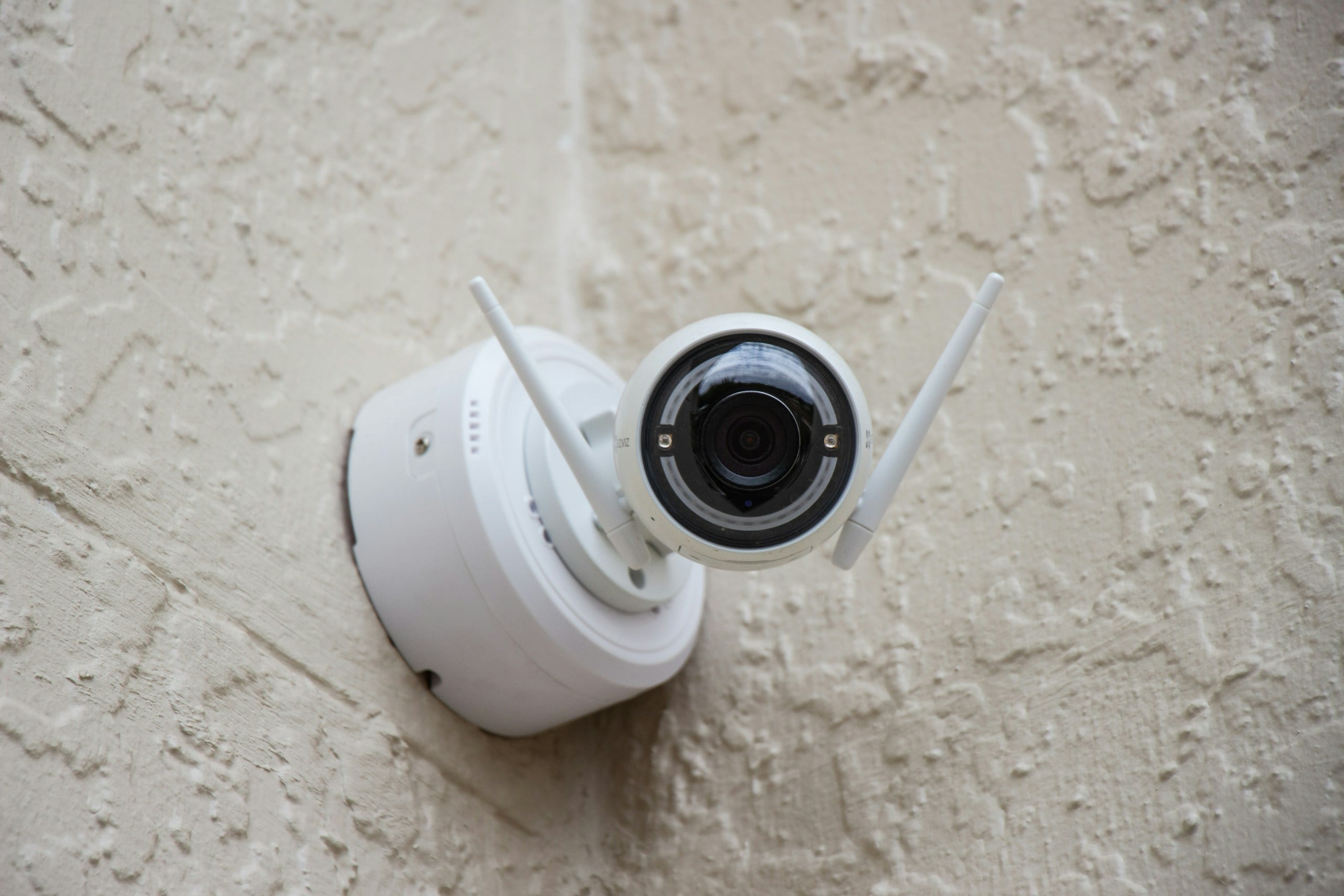
Security cameras: Cameras may make burglars reconsider a property, particularly when they’re visible. But a camera alone can’t guarantee that a break-in won’t happen.
Want to see who’s approaching your front door, even when you’re not home? A video doorbell can send motion alerts and let you check activity right from your phone. Check out our picks for the best video doorbell cameras to explore your options. For more complete protection, see our reviews of the best home security systems and discover simple ways to deter burglars that won’t necessarily cost you a dime.
Outdoor lighting: Well-lit entrances make it harder for someone to approach unnoticed after dark. Motion-activated lights can also draw attention to movement.
Dogs: A barking dog can alert homeowners and neighbors to unexpected activity. Research suggests some burglars avoid houses with dogs, although not every offender is deterred.
Strong locks and reinforced doors: These make entering a home more difficult, especially when combined with other security measures.
The important takeaway? No single device can make a home burglar-proof.
There’s another security concern worth considering: protecting your cameras themselves. Our guide to preventing security camera hacking covers ways to help keep your footage and privacy secure.
What this means for you: Focus on layers of protection rather than relying on one gadget. Secure doors and windows first, then consider alarms, cameras, and lighting based on your home’s layout and vulnerabilities.
5 Home Burglary Myths That Deserve a Second Look
Think you know how burglars operate? Some of the most common assumptions about home break-ins don’t hold up against the research.
Myth #1: Burglars mostly strike in the middle of the night.
Reality: FBI estimates for 2024 show more daytime than nighttime burglaries among incidents classified by time of day, across residential and nonresidential properties. A home can be vulnerable while you’re at work or running errands.
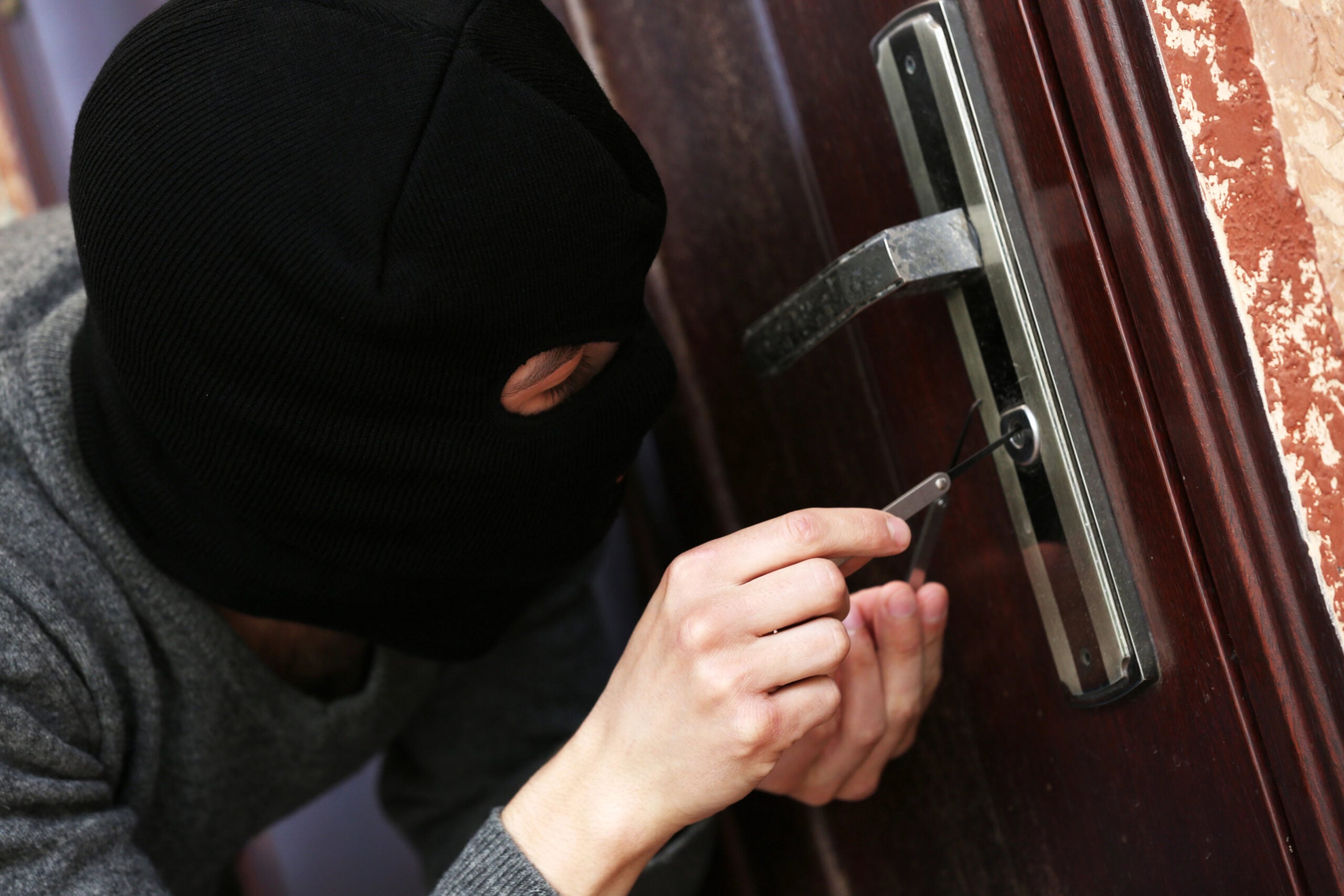
Myth #2: Burglars always break windows or kick down doors.
Reality: In 2024, 37.9% of burglaries involved unlawful entry without force. An unsecured door or window may be all someone needs.
Myth #3: If someone’s home, burglars won’t break in.
Reality: Historical federal research found that someone was home during approximately 28% of household burglaries from 2003 to 2007. Being home is no guarantee of safety.
Myth #4: A security camera or alarm will stop every burglar.
Reality: Security systems can discourage some offenders, but they’re not foolproof. Research suggests multiple layers of security offer better protection than relying on a single device.
Myth #5: Home burglaries are becoming more common.
Reality: National burglary rates have declined substantially. Federal law enforcement estimates show a further 17% drop in burglary victimization rates between 2024 and 2025.
The bottom line? The biggest burglary risk isn’t necessarily the one you picture. Knowing the facts helps you make smarter decisions about protecting your home.
7 Simple Ways to Make Your Home a Harder Target
Here’s the encouraging part: You don’t need to turn your house into a fortress to make it less appealing to burglars.
Based on burglary research, these seven precautions are worth prioritizing.
- Lock up, even when you’re home. Since a substantial share of burglaries involve entry without force, checking doors and accessible windows is one of the simplest places to start.
- Don’t forget the garage. Close the garage door when you’re not using it, and secure the door connecting your garage to the house.
- Reinforce vulnerable entrances. Check exterior doors, deadbolts, strike plates, sliding doors, and window locks. Repair loose hardware or damaged frames.
- Make your house look lived-in. If you’re going away, arrange for someone to collect mail and packages. Avoid obvious signs that your house will be empty for days.
- Improve visibility around your home. Trim shrubs that conceal entrances and consider lighting for darker areas around doors and walkways.
- Consider an alarm or security cameras. Research suggests visible security measures can influence burglars’ decisions. Choose equipment that fits your needs, and remember that no system offers guaranteed protection.
- Protect the things you can’t easily replace. Store important documents and irreplaceable valuables securely. Take photos of expensive belongings and keep an updated home inventory.
The bottom line: You can’t eliminate every burglary risk. But making your home harder to enter, easier for others to observe, and less obviously vacant can help reduce opportunities for a break-in.
And that peace of mind? It’s worth more than anything a burglar could steal.
Frequently Asked Questions About Home Burglaries
The statistics can be surprising, but they also raise some unsettling questions. Would a security camera really make a burglar think twice? Is your house safer when someone’s home? And if you’ve already experienced a break-in, could it happen again?
Let’s tackle a few more questions homeowners often have about burglaries.
Do Burglars Target Houses With Security Cameras?
Some burglars may avoid homes with visible cameras or alarms, especially if they think there’s a greater chance of getting caught. But security equipment isn’t foolproof. Placement, visibility, and the burglar’s motivations can all make a difference.
Are Burglars More Likely To Target Empty Houses?
Research suggests many burglars prefer unoccupied homes because there’s less risk of encountering someone inside. An overflowing mailbox, packages piling up on the porch, or a house that looks consistently empty could make it a more appealing target.
Should You Confront A Burglar In Your Home?
No. Your safety is far more important than anything someone could steal. If you suspect an intruder is inside, don’t investigate or confront them. Leave if you can do so safely, and call 911. If you can’t leave safely, get to a secure location and contact emergency services.
If a burglary happens, getting help quickly matters. But how long could you actually wait for police to arrive? Our look at average police response times across the U.S. explores why response times vary depending on where you live and the type of emergency.
Can A Burglar Return To The Same House?
Unfortunately, yes. Research on repeat victimization suggests that homes previously targeted by burglars can face an increased risk of another break-in. If your home has been burglarized, repair damaged doors or windows, change compromised locks, and address any security weaknesses as soon as possible.
Still have questions about home break-ins or how to keep your family safe? Drop them in the comments below! Your question might be something other homeowners are wondering, too, and could inspire us to dig into another important home security topic.
The Bottom Line: Don’t Wait Until It Happens to You
Nobody expects to come home to find their belongings scattered, valuables missing, and a stranger’s footprints where their family should feel safest.
And while a stolen laptop can be replaced, your grandmother’s ring or a treasured family keepsake might be gone forever. Even harder to replace? That feeling of safety in your own home.
Here’s the thing: You don’t have to wait until something goes wrong to do something about it.
Take 10 minutes today to walk around your home. Check your doors, windows, garage, and any entrances you rarely use. Could someone slip inside through an unlocked window? Is your back door hidden from view? Are there security weaknesses you’ve been meaning to fix?
You might be surprised by what you find.
A few minutes of prevention today could help you avoid the heartbreak of a break-in tomorrow.
Don’t Forget Your Personal Safety
Home security is only part of staying safe. Whether you’re walking alone at night or heading to your car after dark, it’s worth knowing your personal protection options. Check out our guide to the best stun guns and tasers for more information, including safety considerations and local laws.
More Ways to Protect Your Home and Family
Knowing how burglars operate is unsettling. But knowing what you can do about it? That’s empowering.
Whether you’re worried about someone getting through your back door, stealing your family heirlooms, or targeting your house while you’re away, a few smart precautions can go a long way.
Here are some helpful guides to get you started:
- Simple Home Security Ideas That Could Help Deter Burglars: Discover practical, budget-friendly ways to make your home a harder target.
- Best Home Security Systems: Compare alarm systems, monitoring options, and features to find the right protection for your home.
- Best Home Safes: Learn how to better protect jewelry, important documents, and the irreplaceable belongings you’d hate to lose.
- How to Secure Your Garage: Don’t overlook one of your home’s potential weak spots. Explore garage locks, cameras, sensors, and other security upgrades.
You don’t have to tackle every security upgrade at once. Start with the areas that need the most attention, and take small steps today to help protect your home, your family, and the things you can never replace.
Now we’d love to hear from you! Have you ever experienced a home break-in? Did any of these burglary statistics surprise you? Or have you discovered a simple security precaution that gives you extra peace of mind?
Share your experiences and tips in the comments below. Your story could help another reader spot a risk they hadn’t considered and better protect the people and possessions they love.