When you purchase through links on our site, we may earn a commission. Here’s how it works.
Ever get the feeling your neighbor knows a little too much about what happens on your property? Maybe their security camera points toward your house, their doorbell camera catches your every move, or they somehow seem to know about conversations you never intended them to hear.
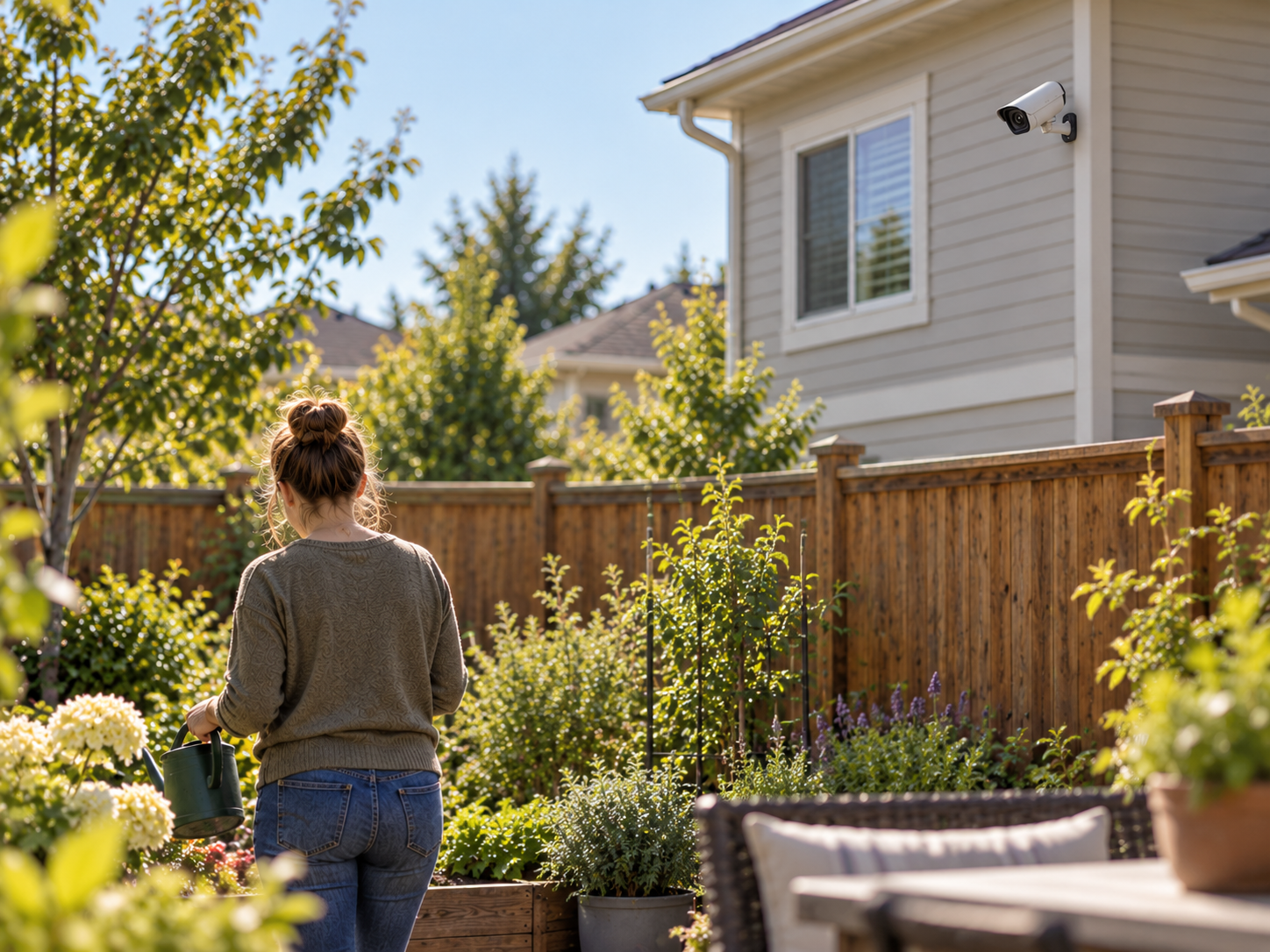
I know that feeling firsthand. My neighbor has a security camera aimed directly at my backyard, and he comes outside almost every time I do. More than once, he’s even knocked on my door to comment on conversations he’s overheard and offer unsolicited advice about my personal business. Apparently, privacy wasn’t included with my property.
With video doorbells and home security cameras becoming part of everyday life, it’s easier than ever to capture activity beyond your own property. Sometimes it’s ordinary home security. Other times, it raises uncomfortable questions about how much privacy you really have at home.
So, when does a neighbor’s camera cross the line? Here’s how to tell what’s generally legal, what might violate your privacy, and what you can actually do about it without starting a neighborhood war.
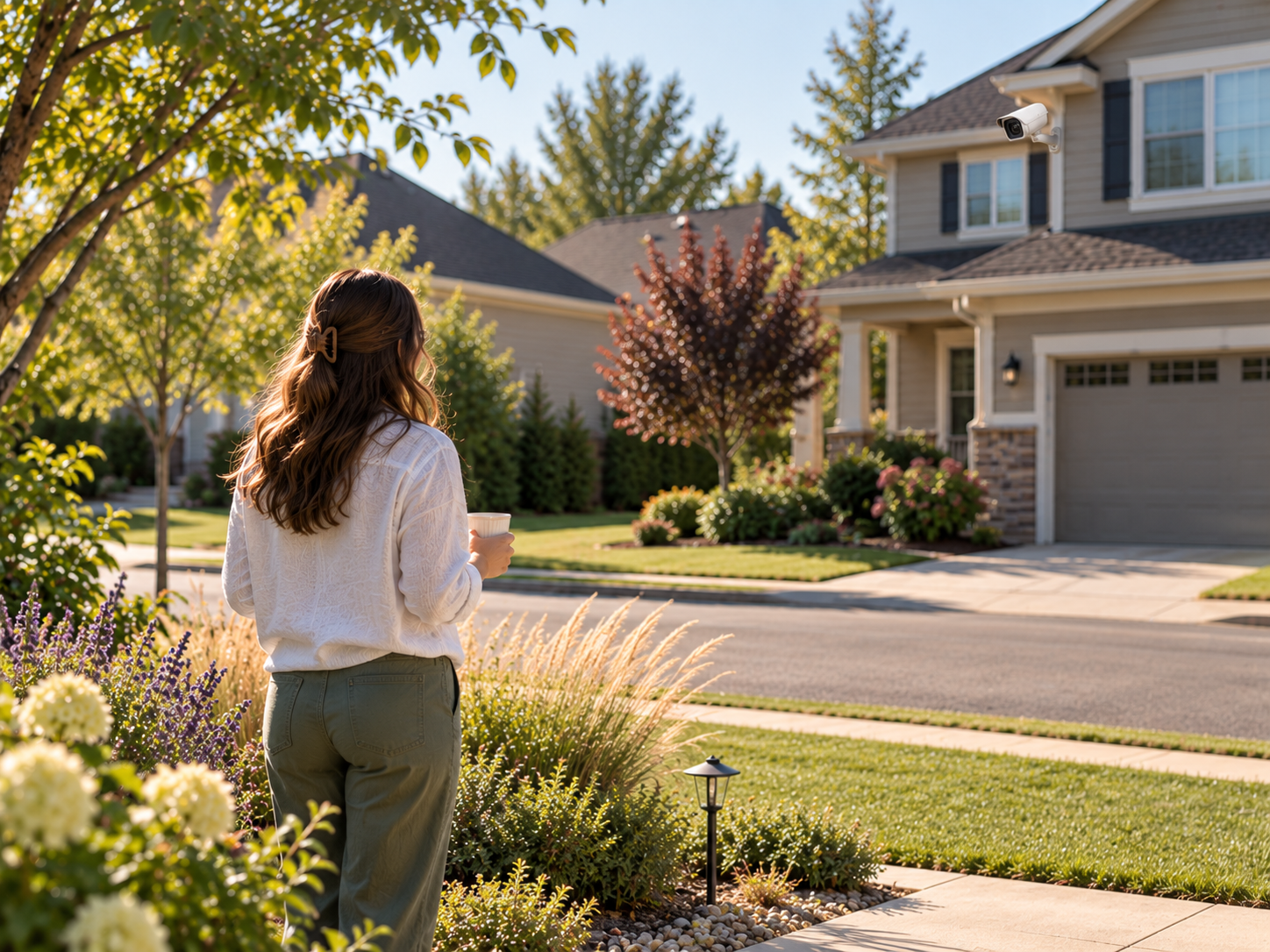
Can My Neighbor Legally Record Me On My Property?
The short answer is yes, in many situations. But there are limits.
In most of the U.S., your neighbor can generally record areas visible from their property or public spaces. A security camera capturing your driveway, front lawn, or the outside of your home isn’t automatically violating your privacy.
Things get more complicated when cameras point into private areas, microphones capture protected conversations, or surveillance becomes part of repeated unwanted behavior.
The biggest factor is often your reasonable expectation of privacy. In simple terms, certain places and activities have stronger legal privacy protections than others. A front driveway visible from the street differs greatly from a bedroom behind closed curtains. And just because something happens on your property doesn’t automatically make it private under the law.
Is Your Neighbor’s Camera Crossing A Privacy Line?
Not every camera pointed toward your property is breaking the law, but some situations raise bigger privacy concerns than others. Here’s how common scenarios compare and where the legal lines can get blurry.
| Situation | Generally legal? | What matters |
|---|---|---|
| Doorbell camera captures your driveway or front yard | Often yes | These areas are commonly visible from outside. |
| Security camera records the exterior of your house | Often yes | Ordinary exterior views generally have less privacy protection. |
| Camera looks over a fence into your backyard or pool | Depends | Privacy measures, camera placement, recorded activities, and state law matter. |
| Camera is deliberately aimed into a bedroom or bathroom | Potentially illegal | Private activities and certain interior spaces receive stronger protection. |
| Camera microphone records your private conversations | Potentially illegal | Federal and state audio recording laws may apply. |
| Neighbor repeatedly films or follows you to intimidate you | Depends | A pattern of conduct may raise harassment, stalking, or privacy concerns. |
These are general examples, not definitive legal rulings. The details of each situation and the laws in your state can change the answer.
When A Doorbell Or Security Camera Catches Your Yard
This is probably the most familiar scenario. Your neighbor installs a video doorbell, and suddenly every time you bring in groceries, walk the dog, or back out of the driveway, you wonder whether you’re starring in their latest motion-alert clip.
In most cases, a security camera capturing areas already visible from the street or neighboring property is generally permissible.
For example, suppose your neighbor’s doorbell camera points toward their front porch but also captures your driveway across the street. That’s usually considered ordinary security monitoring.
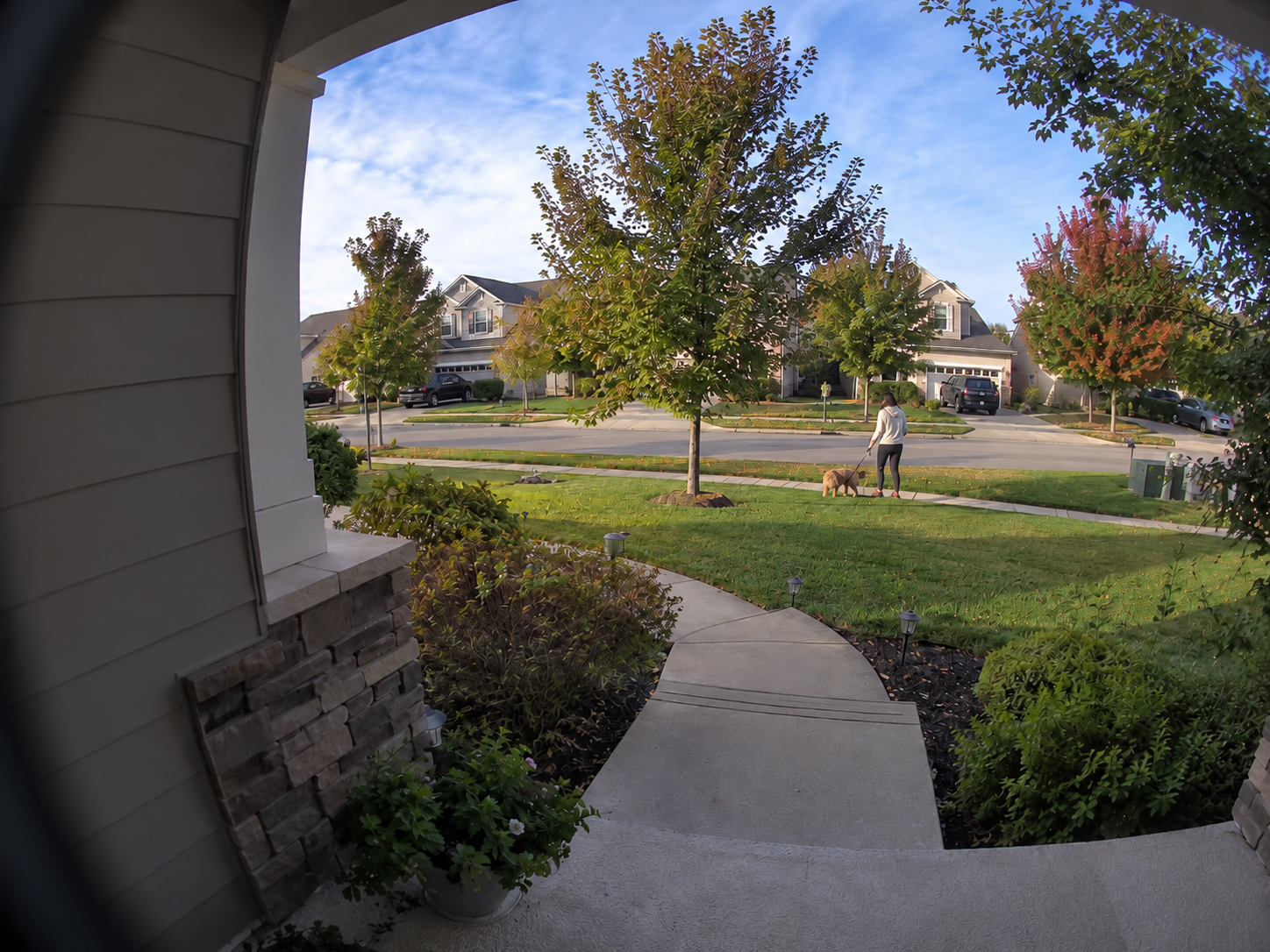
The camera doesn’t have to stop recording simply because your property appears in the background.
Camera capabilities can also make a difference. Some wireless outdoor security cameras offer wide-angle views, motion detection, zoom, or two-way audio, which can affect how much of the surrounding property they capture.
If you’re thinking about installing a video doorbell yourself, camera placement and privacy settings are worth considering from the start. Our guide to the best doorbell cameras can help you compare features and find an option that protects your front door without unnecessarily capturing your neighbors’ activities.
Security cameras are only one part of protecting a home. Door and window sensors, motion detectors, and other equipment can also help monitor entry points. Our guide to choosing a home security system explains how these features work together.
What If The Camera Points Directly At Your House?
A camera facing your property isn’t automatically illegal. Its field of view, what it’s actually recording, and how it’s being used all matter.
There’s a difference between a camera mounted to monitor a side gate and one deliberately positioned or adjusted to follow a particular neighbor’s activities.
Even then, the direction of the camera alone doesn’t establish a legal violation. But a pattern of intrusive monitoring may become relevant if other unwanted behavior is involved.
And here’s something worth knowing: many security cameras have settings that can help protect neighboring properties.
For example, some Ring devices offer Privacy Zones that block selected areas from appearing in live views or recordings. Compatible devices may also allow audio recording to be disabled.
That means a simple adjustment might solve the problem without anyone having to remove their camera.
Can My Neighbor Record My Backyard, Windows, Or Pool?
A camera capturing your driveway is one thing. A camera overlooking your fenced backyard, swimming pool, or bedroom window is another. These areas can involve greater expectations of privacy, particularly when someone deliberately records activities that aren’t ordinarily visible to others.
But privacy laws don’t automatically protect every inch of a fenced property. Visibility, camera placement, the nature of the activity, and state law all play a role.
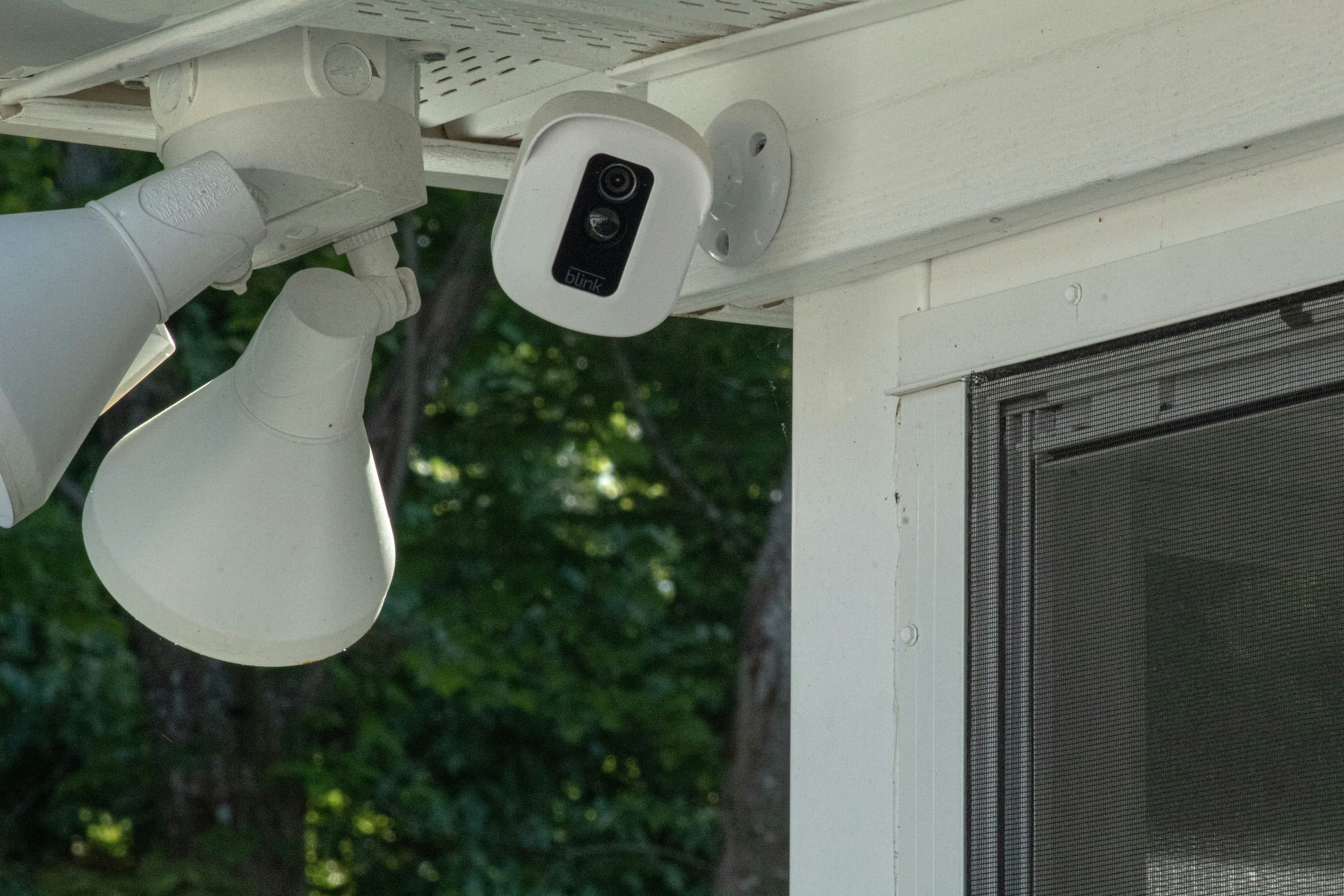
Cameras Pointed At Bedroom Or Bathroom Windows
A camera deliberately positioned to record private activities inside someone’s home raises particularly serious privacy concerns.
Bedrooms, bathrooms, and changing areas generally receive stronger privacy protections than exposed outdoor spaces.
Many states have laws addressing voyeurism or certain forms of nonconsensual recording. Depending on the circumstances, deliberately filming someone through a window may violate criminal or civil privacy laws.
For example, a security camera that incidentally captures outside your bedroom window isn’t the same as one deliberately positioned or zoomed in to record someone changing clothes inside.
The second scenario raises much stronger legal concerns.
If you suspect someone is intentionally recording private activities inside your home, document what you’ve observed and consider seeking appropriate legal or law-enforcement guidance.
What About A Fenced Backyard, Hot Tub, Or Pool?
A privacy fence can show you’ve taken steps to shield an area from view. But it doesn’t guarantee that every activity behind it is legally protected from observation.
Consider two situations.
Scenario 1: Your neighbor installs a camera to monitor their garage entrance. The edge of your swimming pool happens to appear in the background.
Scenario 2: Your neighbor mounts a camera higher, adjusts its angle toward your screened patio, and uses its zoom or tracking features to follow people around your pool.
The second situation raises more serious questions about intentional surveillance and privacy, although neither example establishes a violation without considering the applicable law and full circumstances.
A camera that captures part of your lawn is different from one deliberately used to observe activities you’ve tried to keep private.
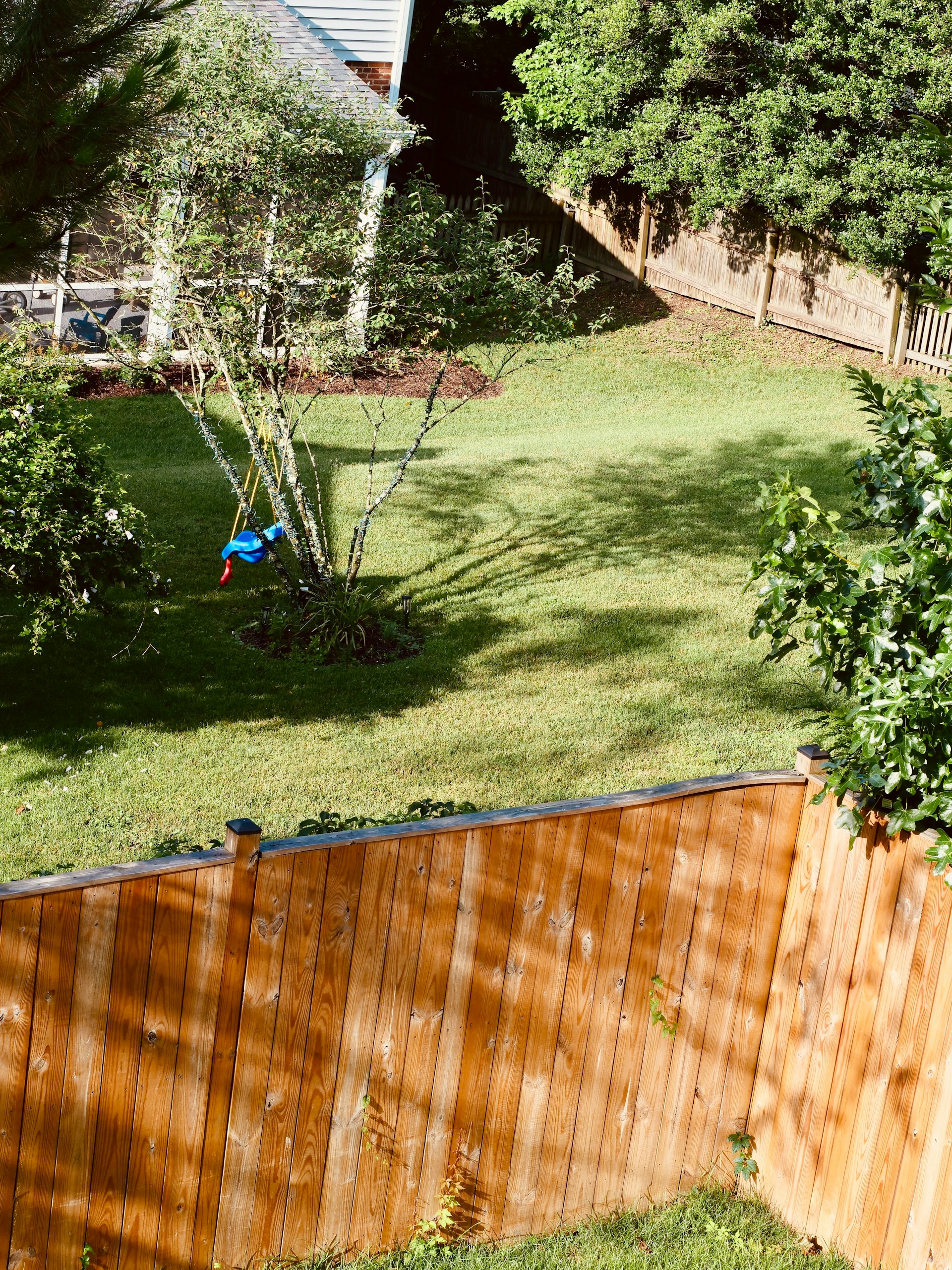
When Does A Neighbor’s Camera Become Targeted Surveillance?
There’s a difference between a security camera that happens to capture part of your property and a neighbor who seems unusually interested in everything you do. One might simply be part of everyday home security. The other can leave you feeling uncomfortable every time you step outside.
A camera pointed toward your yard isn’t automatically illegal. But when surveillance seems deliberately focused on you, especially alongside repeated unwanted attention, intimidation, or attempts to listen to private conversations, it may raise additional privacy or harassment concerns.
Some situations worth paying attention to include:
- Repeatedly monitoring your movements: A neighbor consistently watches or films you whenever you’re outside.
- Recording private areas: Cameras appear deliberately aimed into bedroom windows, bathrooms, or other areas where privacy is reasonably expected.
- Listening to conversations: Someone attempts to record private conversations they aren’t participating in.
- Using footage to intimidate you: A neighbor threatens to share recordings or uses them to make you uncomfortable.
- A pattern of unwanted attention: Repeated monitoring or confrontations that seem directed at you rather than ordinary property security.
None of these behaviors automatically establishes that a law has been broken. A neighbor may legally observe activities visible from their property or overhear conversations without using recording equipment. However, intentional intrusions into private activities, unlawful audio recording, or a broader pattern of harassment may cross legal boundaries, depending on state law and the circumstances.
If you’re concerned that your neighbor is deliberately monitoring you, document specific incidents and avoid making assumptions about what a camera captures. We’ll cover practical ways to address the situation, protect your privacy, and determine when outside help may be appropriate later in this guide.

Video Vs. Audio: Why The Microphone Matters
Here’s something many homeowners overlook: recording video and recording conversations are not necessarily governed by the same laws.
Federal law provides important protections against certain types of electronic surveillance. The Electronic Communications Privacy Act of 1986 (ECPA) addresses the interception of wire, oral, and electronic communications, including certain private conversations.
But the law doesn’t treat every security camera recording the same way. Silent video surveillance, audio recording, and filming someone in a private space can raise different legal questions. State privacy laws, recording-consent requirements, and the circumstances of the recording all play a role.
Not all security cameras record the same way. Some capture short clips when motion is detected, while others record continuously. Our guide to 24/7 security cameras explains how continuous recording works and what features these systems offer. Just remember that continuous video recording doesn’t necessarily mean a camera is also recording audio.
A neighbor’s camera might legally capture the outside of your home while its audio recording creates a separate legal concern.
And it’s not just neighbors who raise privacy concerns. Internet-connected cameras, smart speakers, and other devices can collect sensitive information, which is why understanding smart home privacy risks is increasingly important.
Can My Neighbor Record My Conversations?
Federal law generally follows a one-party consent rule for protected conversations.
That means someone participating in a conversation can generally consent to recording it, or another participant can give permission, subject to important exceptions and potentially stricter state laws.
But here’s the catch: your neighbor can’t simply consent on behalf of people having a conversation they aren’t part of.
Suppose you’re sitting on your patio having a quiet discussion with your spouse. If your neighbor intentionally uses a microphone to intercept that protected conversation without either person’s consent, federal or state recording laws may apply.
However, that doesn’t mean every outdoor conversation is legally private.
A conversation shouted across the yard or clearly audible to people on a public sidewalk may receive less protection than a quiet conversation held somewhere reasonably secluded.
The circumstances matter, including where the conversation takes place, how loudly people speak, and whether they reasonably expect it to remain private.
Federal law addresses the intentional interception of protected communications under 18 U.S.C. § 2511.
Is Overhearing a Conversation the Same as Recording It?
No, and this distinction matters.
Neighbors sometimes overhear each other. Houses are close together, fences don’t block sound particularly well, and conversations can carry farther than people realize.
Simply hearing someone speaking from a neighboring yard isn’t necessarily illegal.
Using electronic equipment to intercept a protected private conversation is different.
A neighbor overhearing your voice while gardening is not the same as intentionally using a microphone or listening device to capture a conversation they otherwise wouldn’t hear.
And if you’re concerned that a security camera is recording audio, don’t assume it is simply because the camera has a microphone. Its actual settings and recording behavior matter.
Can My Neighbor Film Me With A Phone Or Handheld Camera?
Security cameras aren’t the only concern. What if your neighbor stands at the fence filming you with a smartphone, handheld video camera, or camcorder?
Maybe they pull out their phone whenever you have guests over. Or perhaps they deliberately aim a handheld camera toward your backyard while you’re relaxing outside.
It can feel intrusive, but intentionally filming someone on their own property isn’t automatically illegal. What matters is where the filming takes place, what the camera captures, whether audio is recorded, and how the footage is used.
For example, a neighbor recording a property-line dispute from their own yard may be acting legally, depending on the circumstances and applicable recording laws. But deliberately filming private activities or repeatedly using a camera to threaten or intimidate someone can raise different legal concerns.
When Does Filming Become Harassment?
The answer depends on your state’s laws and the complete pattern of conduct.
Some states recognize repeated surveillance, following, threatening behavior, or other unwanted contact as potential elements of harassment or stalking offenses.
However, repeatedly seeing a neighbor outside or noticing that they have a camera pointed in your direction doesn’t automatically establish either offense.
What matters is the nature of the conduct, its frequency, any threats or intimidation involved, and the specific legal requirements.
If you believe someone is deliberately targeting you, document observable incidents rather than relying only on assumptions about their intentions.
When A Neighbor’s Camera Starts Feeling Personal
My experience has made me realize that sometimes the most unsettling part isn’t the camera itself. It’s discovering how closely someone has been paying attention.
When my neighbor has shown up at my door to comment on conversations I’ve had outside, it’s made me much more conscious of what I say in my own yard.
But there’s an important legal distinction. Knowing that someone overheard a conversation doesn’t prove that they recorded it or violated the law.
That’s why it’s important to separate what you’ve actually observed from what you suspect. Specific incidents, repeated behavior, and evidence of intrusive recording may all be relevant if you eventually seek legal advice.
Can My Neighbor Share Or Post Videos Of Me?
Here’s another uncomfortable possibility: Your neighbor records you on a security camera, then shares the footage with other people.
Maybe they send it to the neighborhood group chat, post it on Facebook, or upload it to a community app.
Recording footage legally doesn’t necessarily mean someone can use or share it without restrictions. But sharing a video of another person isn’t automatically illegal, either.
For example, a neighbor posting security footage of someone stealing a package may be acting within their rights.
However, sharing recordings can raise separate legal questions depending on what they show, how they were obtained, and how they’re used.
When Sharing Footage May Cross A Line
False accusations: Posting a video with false statements that damage someone’s reputation may create defamation concerns.
Harassment: Repeatedly sharing clips to threaten, intimidate, or target someone may become relevant under applicable harassment laws.
Private activities: Distributing footage unlawfully captured in private spaces may violate privacy or voyeurism laws, depending on the circumstances.
Illegally intercepted conversations: Federal and state laws can restrict the disclosure or use of certain unlawfully intercepted communications. However, liability and legal protections depend on how the material was obtained and who is sharing it.
Picture this: Your neighbor posts a clip of you walking to your car and falsely claims you’re snooping around other people’s vehicles.
That’s quite different from sharing a factual video of a package theft.
If someone posts footage of you that appears threatening, invasive, or defamatory, save screenshots and links before reporting it to the platform. A qualified attorney can help determine whether you have legal options.
Do Neighbor Recording Laws Differ By State?
Yes, and this is one reason there isn’t a universal answer to every recording dispute.
Federal law establishes important protections for certain communications, but states can impose additional restrictions.
The biggest difference many people encounter involves one-party versus all-party consent for recording conversations.
One-Party Consent Vs. All-Party Consent
In a one-party consent state, a participant can generally record a protected conversation without obtaining every other participant’s consent, subject to applicable exceptions.
In an all-party consent state, recording certain private conversations generally requires permission from everyone involved.
But the rules are more complicated than simply dividing the country into two groups.
Some states distinguish between telephone calls and in-person conversations. Others focus specifically on confidential communications or secret recording.
Here are a few examples:
| State | General Recording Rule | Important Distinction |
|---|---|---|
| Texas | Generally one-party consent | A participant, or someone with a participant’s consent, can generally record covered conversations, subject to exceptions. |
| California | All-party consent for confidential communications | Electronically recording or eavesdropping on confidential conversations generally requires everyone’s consent. Certain phone calls have additional protections. |
| Washington | Generally all-party consent | The rule applies to private conversations and communications, with statutory exceptions and specific ways to establish consent. |
| Missouri | Different rules for telephone and in-person conversations | One-party consent generally applies to covered telephone calls, while private in-person recordings involve additional restrictions. |
Important: These rules primarily concern recording communications. They don’t mean that every silent security camera requires permission from everyone who appears in its footage.
States also have separate laws addressing certain invasive visual recordings, voyeurism, privacy intrusion, harassment, and stalking. Local ordinances and property restrictions may affect camera placement or installation.
Local ordinances, property rules, and HOA restrictions may affect camera installation or placement, though those rules vary in applicability.
These examples show why location matters, but they don’t tell the whole story. State recording-consent laws generally focus on conversations, while separate privacy, voyeurism, and harassment laws may apply to security cameras and other forms of surveillance.
Wondering what the rules are where you live? The Reporters Committee for Freedom of the Press provides a state-by-state guide to recording laws, including audio consent requirements and certain restrictions on hidden cameras. Keep in mind that local laws and the circumstances of a recording can also affect what’s permitted.
Because recording laws and court interpretations can change, check current local requirements or speak with an attorney before relying on a general summary.
What Can You Actually Do If Your Neighbor’s Camera Makes You Uncomfortable?
Knowing your privacy rights is one thing. Figuring out what to do about a neighbor’s camera is another.
Even when a security camera is legal, you may still have options to make your home feel more private.
And not every disagreement needs to turn into a neighborhood feud.
Before You Confront Your Neighbor: 5 Things To Consider
Not every camera dispute requires a confrontation. Before approaching your neighbor, take a few minutes to assess the situation and consider your options.
- Check the camera’s view. Look at its position and what it might capture, but don’t assume you know exactly what it’s recording.
- Document concerning behavior. Keep track of incidents, dates, conversations, and any unwanted contact.
- Put safety first. If your neighbor has been hostile, threatening, or intimidating, you don’t have to approach them directly.
- Consider a simple adjustment. Repositioning the camera, adding privacy zones, or turning off audio may address your concerns.
- Avoid retaliation. Don’t damage, block, or interfere with their equipment. It could create legal problems for you.
The goal isn’t to start a neighborhood feud. It’s to understand what’s happening and find the safest, most practical way to protect your privacy.
Here are seven ways to address the situation.
1. Find Out What The Camera Is Really Capturing
Before assuming a camera is recording your backyard, try to determine what it actually sees.
Security cameras often have wide-angle lenses, and the direction they appear to face doesn’t always reveal their full field of view.
Look at where the camera is mounted, whether it rotates, and what areas it might reasonably capture.
If you have a friendly relationship with your neighbor, ask whether they’d be willing to show you the camera’s view.
You may discover that only a small corner of your property appears in the image. Or you may learn that the camera captures considerably more than you expected. Either way, having accurate information is better than guessing.
2. Talk To Your Neighbor, If You Feel Safe Doing So
Sometimes a straightforward conversation can resolve a camera concern.
Rather than accusing your neighbor of spying, explain what you’ve noticed and what makes you uncomfortable.
For example:
“I noticed your new security camera seems to face our patio. We spend a lot of time out there. Would you mind checking whether that area appears in your recordings?”
A calm, specific request may be more productive than demanding that someone remove their camera.

However, you don’t have to confront someone directly if they’ve threatened you, repeatedly ignored boundaries, or made you feel unsafe.
In those situations, written communication, mediation, or outside assistance may be more appropriate.
3. Ask About Repositioning Or Privacy Zones
Your neighbor may not need to remove their camera to address your concerns.
Several security-camera systems offer settings or mounting adjustments that can limit what they capture.
Possible solutions include:
- Repositioning the camera away from your windows or patio.
- Adding a privacy zone that blocks part of the image.
- Adjusting motion-detection areas.
- Disabling audio recording when appropriate and supported.
- Changing the camera’s mounting angle or location.
For example, Ring’s privacy settings allow compatible devices to mask parts of the image. Ring also offers audio controls on supported devices.
Keep in mind that privacy masking and motion detection aren’t always the same. Depending on the system, a camera may still detect motion in an area hidden from its video feed.
Asking for a specific adjustment may be easier than asking someone to give up their home security entirely.
If your neighbor mainly wants to know when someone enters their driveway or approaches a delivery area, a camera isn’t always the only option. Driveway alarms can detect approaching people or vehicles without necessarily recording video of the surrounding properties.
4. Create More Privacy On Your Own Property
If talking doesn’t work, or you’d rather avoid the conversation, consider ways to shield your home and yard.
Depending on your space, you might try:
- Privacy fencing: A solid fence or approved fence extension can reduce visibility.
- Landscaping: Tall shrubs, hedges, or strategically placed trees can screen patios and seating areas.
- Outdoor curtains or screens: Useful for porches, decks, and pergolas.
- Patio umbrellas or shade sails: Can help block overhead views.
- Window coverings: Curtains, blinds, and appropriate privacy film can reduce visibility into your home.
Before installing permanent barriers, check property boundaries, local height restrictions, and applicable HOA rules.

Also remember that screening your property may help establish that you intended to keep an area private, but it doesn’t automatically guarantee legal protection from every type of observation.
Privacy and security sometimes require different solutions. Along with fencing and landscaping, you can explore our home security ideas for additional ways to protect your property without depending entirely on surveillance cameras.
5. Keep Records Of Concerning Behavior
If the issue goes beyond a typical camera disagreement, documentation may help.
Keep a written record of incidents, including dates, times, and exactly what happened.
For example, if a neighbor repeatedly approaches you after overhearing conversations, record what they said and when the interaction occurred.
Other useful documentation may include photographs of a camera’s visible position, relevant messages, screenshots of online posts, and written requests you’ve made.
Stick to facts you can verify. There’s a difference between documenting that a neighbor repeated your conversation and claiming their security camera secretly recorded it.
That distinction can matter if you eventually speak with an attorney or authorities.
6. Consider Mediation Or Other Local Resources
Not every camera dispute needs to begin with a police report or lawsuit.
Depending on your community and the situation, you may have other options.
An HOA or property manager may be able to explain applicable installation rules. Local code enforcement may address certain structures or placement issues. Community mediation programs can sometimes help neighbors resolve disputes.
These resources don’t necessarily address privacy violations, but they may help resolve practical disagreements before they escalate.
If the neighbor’s behavior has become threatening or intimidating, mediation may not be appropriate.
7. Know When To Contact Police Or An Attorney
Some situations warrant professional guidance rather than another conversation across the fence.
Consider contacting an attorney familiar with local privacy law if you suspect intentional recording of private activities, unlawful interception of conversations, or persistent intrusive surveillance.
An attorney can help assess whether the conduct may support a civil privacy claim, such as intrusion upon seclusion, or whether another remedy is available.
Law enforcement may be appropriate if you have reason to suspect criminal conduct, including voyeurism, credible threats, stalking, or unlawful recording.
For nonemergency concerns, use your local police department’s nonemergency contact information. If you’re in immediate danger, call emergency services.
And one important warning: Don’t damage, hack, jam, or otherwise interfere with your neighbor’s security camera. Retaliating can create legal problems of your own.
Frequently Asked Questions
Every neighborhood situation is a little different, and even a small detail, like where a camera points or whether it records audio, can change the legal picture. We’ve covered the most common concerns, but you may still be wondering how these rules apply to something happening next door.
Here are answers to a few more common questions about neighbor surveillance, recording laws, and protecting your privacy.
Have a question about a neighbor’s security camera or an experience you’d like to share? Leave it in the comments below. We’d love to hear what’s happening in your neighborhood, and your question might help another reader dealing with the same issue.
Can My Neighbor’s Ring Camera Point At My House?
Generally, a Ring camera or other security camera may capture the visible exterior of nearby homes. However, recording protected conversations, private activities, or using a camera in an intrusive or unlawful way can create different legal concerns.
Can My Neighbor Record Me In My Fenced Backyard?
Possibly. A fence can help establish an expectation of privacy, but it doesn’t automatically make all recording illegal. Your yard’s visibility, camera placement, the activity being recorded, and state law all matter.
Can A Neighbor’s Doorbell Camera Record My Conversations?
Security cameras with microphones can technically capture nearby conversations. Whether recording a particular conversation violates the law depends on factors such as consent, privacy expectations, and applicable federal or state requirements.
Can My Neighbor Post Security Footage Of Me Online?
Sometimes. Footage lawfully captured in areas visible to others may generally be shared, subject to applicable restrictions. False accusations, unlawful disclosures, privacy violations, or repeated harassment can raise additional legal concerns.
Can I Install a Fence or Plant Trees to Block My Neighbor’s Camera?
Generally, you can make lawful changes to your property to increase privacy. However, property boundaries, building codes, height limits, HOA rules, and other restrictions may apply.
Can I Record My Neighbor Back?
You may be able to install your own security cameras, subject to the same privacy and recording rules that apply to your neighbor. Avoid aiming cameras into private spaces or recording protected conversations without legally required consent.
Installing a camera for home security is different from using one to retaliate or intimidate someone.
Do You Have To Post Signs If You Have Security Cameras?
Generally, no. Most homeowners aren’t legally required to post warning signs for ordinary outdoor security cameras. If your camera monitors your driveway, front porch, or other areas visible from outside, a surveillance sign usually isn’t necessary.
However, state and local laws may have additional requirements, especially for certain properties or types of surveillance. Audio recording also comes with separate legal rules, and simply posting a sign doesn’t automatically give you permission to record private conversations.
Even when signs aren’t required, they’re worth considering. A simple “Security Cameras In Use” sign can alert visitors, discourage trespassers, and help prevent misunderstandings with neighbors. Just remember that posting a sign doesn’t make otherwise unlawful recording legal.
Can My Neighbor Record Me Inside My House?
Being inside your own home generally comes with a stronger expectation of privacy, but that doesn’t mean everything visible through a window is automatically protected.
A security camera that incidentally captures your front windows is different from a neighbor deliberately zooming in to record activities inside your home. Filming someone in a bedroom, bathroom, or another private area may violate privacy or voyeurism laws, depending on the circumstances and state laws.
If you’re concerned about a camera facing your windows, consider curtains, blinds, or privacy window film. If you suspect someone is deliberately recording private activities inside your home, document what you’ve observed and consider seeking legal advice.
Can My Neighbor Use A Drone To Record My Property?
Your neighbor may be allowed to fly a drone over or near your property, but that doesn’t automatically give them permission to record private activities.
Federal aviation rules govern drone operations, while state and local laws may restrict invasive filming, voyeurism, or harassment. A drone briefly capturing your backyard is different from one repeatedly hovering outside your windows or deliberately filming private activities.
If you’re concerned, document when and where the drone appears. You can report potentially unsafe flying to the appropriate authorities and consult a local attorney about privacy concerns. Never attempt to shoot down or damage a drone, even if it’s flying over your property.
My Own Neighborhood Camera Standoff
I wish I could say my neighbor and I worked things out. I’ve tried talking to him, but he insists the camera is necessary because he has packages delivered to his backyard. I’ve installed privacy shades and fencing, but his camera still overlooks a good portion of my yard. I also remain concerned about how much of our conversations he can hear.
So, the situation isn’t resolved. And that’s the frustrating reality of some neighborhood privacy disputes. Even when you take reasonable steps to protect your space, you can’t always control what happens on the other side of the fence.
Your Home Should Still Feel Private
You shouldn’t have to feel constantly watched in your own backyard. Understanding your rights, documenting concerning behavior, and exploring practical solutions can help you protect your privacy without unnecessarily escalating a neighbor dispute.
Home security and respecting your neighbors’ privacy should go hand in hand. If you’re considering cameras for your own property, our guide to security camera installation and placement can help you choose sensible locations. You can also explore our recommendations for the best outdoor security cameras. Just remember to think about what’s in the frame beyond your property line.
Has A Neighbor’s Camera Ever Crossed The Line?
Have you dealt with a neighbor whose security camera made you uncomfortable? Did you find a solution, or are you still working on it? Share your experience in the comments. Your story might help someone facing the same situation.
This article provides general information about U.S. recording and privacy laws, not legal advice. Laws vary by jurisdiction and circumstances. Consult a qualified local attorney about your specific situation.